
Why Inspiration Beats Motivation for Leaders
Most leadership conversations I have start with some version of the same question:
❓How do we get our people more motivated?
It’s the wrong question or at least, it’s aiming at the wrong target.
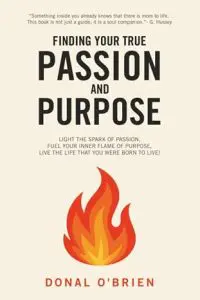
In my coaching work, and in Finding Your True Passion and Purpose, I make a distinction that changes how a lot of leaders think about engagement: motivation and inspiration are not the same thing, and only one of them is sustainable. One is intrinsic and the other is focused on the extrinsic.
Two Different Energies
Try this quickly. Say out loud:
“I am motivated to take action.”
Now say,
“I am inspired to take action.”
Notice the difference in energy between the two sentences.
That’s not just wordplay, it points to something real about how each state actually operates.
Motivation comes from a place of separation: we’re here, we want to be there, and motivation is the effort we apply to close that gap. It works, but it comes with friction.
You have to fire yourself up.
You’re pushing against resistance, often driven by fear of missing a target, disappointing someone, or falling behind.
Inspiration is different.
It’s the origin of the word itself from the Latin for “to breathe into.” Inspired action doesn’t require the internal argument.
There’s no “I should” or “I have to.” The action flows because it’s aligned with something the person actually values. It’s effortless, not because the work itself is easy, but because the resistance to doing it has disappeared.
The €100,000 Sales Target
Here’s an example I use with clients.
Say a salesperson needs to make forty business development calls a day to hit a €100,000 revenue target. On a Monday morning, there’s real resistance to picking up that phone. To push through it, they motivate themselves – they picture the holiday, the bigger house, the freedom the money will eventually buy.
- That works.
- It gets the calls made.
- But it’s effortful every single day, because the task itself was never the point, the reward at the end of it was.
Now picture the same salesperson genuinely energised by the conversations themselves – curious about the prospect’s problem, engaged by the process of helping someone find a solution.
That’s inspiration.
Same calls, same target, completely different internal experience and, in my observation, usually better and more sustained results, because it doesn’t run out the way willpower does.
Sisyphus, and the Question Every Manager Should Sit With
There’s an old story worth borrowing here: Sisyphus, condemned to roll a boulder up a hill forever, only for it to roll back down each time.
Albert Camus used it as a symbol of the human struggle to find meaning in repetitive, seemingly pointless work which, if we’re honest, describes a fair amount of what happens inside most organisations. Emails. Reports. The same client call, differently phrased, for the tenth time this month.
Camus’ answer wasn’t to change the task. It was to ask whether Sisyphus could find meaning, even joy, in the act of pushing the boulder itself. The question I’d put to any manager reading this: can your people find presence and even enjoyment in the unglamorous, repetitive parts of their role or are they only ever working toward the next reward, the next escape, the next Friday?
What This Means for How You Lead
You can’t mandate inspiration, and trying to manufacture it with forced enthusiasm usually backfires. But you can build the conditions for it:
Connect the task to something that matters to the person doing it, not just to the target on the dashboard. Reduce the fear-based drivers to the “hit this number or else” undertone that keeps people operating from motivation’s friction rather than inspiration’s ease. And create a little space and stillness in the working day, because inspiration, as I put it in the book, “doesn’t shout, it whispers” and nobody hears a whisper over constant busyness and noise.
Motivation will always have a role.
Some days, everyone needs to just push through. But if your engagement strategy relies on motivation alone, you’re asking your people to run on willpower indefinitely. Build toward inspiration instead, and the same work gets done with a great deal less friction for them, and for you. Essentially what you are doing as a leader is changing someone’s relationship to the very thing they are doing.
What if the next business development call became really important not just because you want to make your sales target for the month but also because you valued the client and looked forward creating more value for them?
If you’d like to explore this further with your leadership team through a talk, a workshop, or executive coaching get in touch.
And for the fuller picture, Finding Your True Passion and Purpose is available now on Amazon.